
Originally published on July 16, 2024
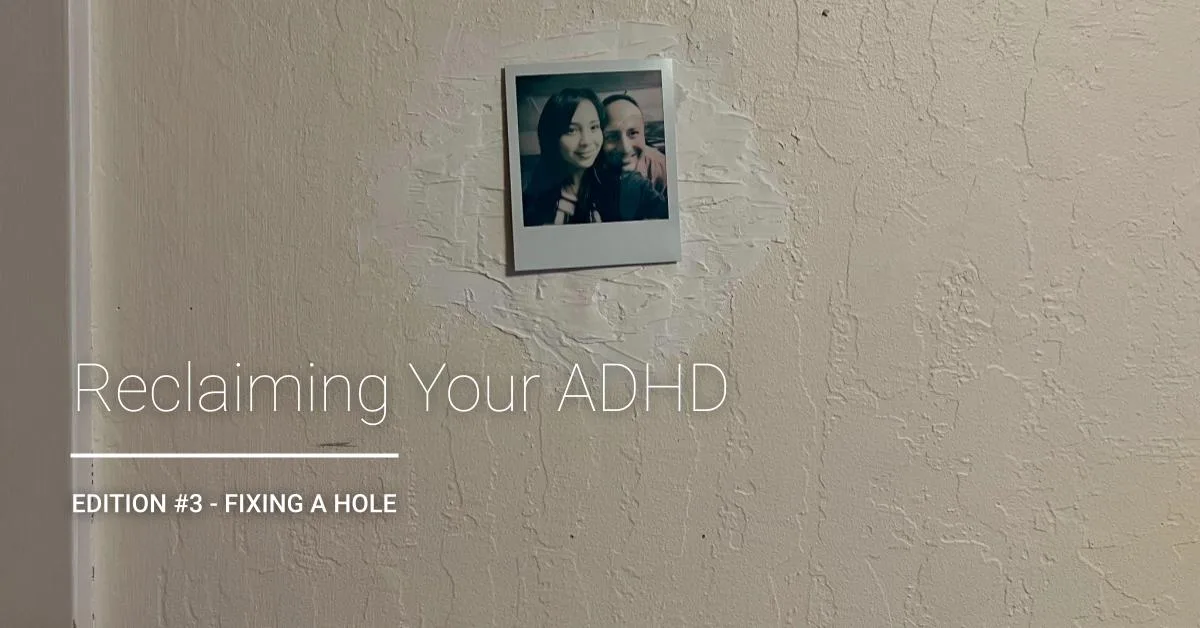
I punched a hole in the wall. For the first time in a while I totally lost my cool. Anger took over my mind and body completely. I’m not a violent person at all. I’ve never even been in a fist fight of any type but at that moment I needed to get the energy out somehow and hit the wall harder than expected.
What came after was a familiar feeling. The inability to calm down, listen to anyone, and wanting to continue in my anger was all consuming. All I could see was red and wanted to lay flame to whoever was in my path. My ability for compassion and understanding was gone. I reverted back to a coping mechanism I used while growing up and left the situation altogether knowing that was the only way to come to my senses. Once the anger subsided, shame and guilt were next to take over as I had to now come to grips with the damage done, both emotionally and literally in the case of the wall.
While getting to this anger point has happened many times throughout my life, it was the first time getting this angry since beginning my coaching journey. The fallout in the days after felt like a major setback. It led me to question whether coaching was effective at all. It led me to question whether I was a fraud as a coach. Enthusiasm waned for my coaching practice when just a few days before I was ecstatic with the prospect of making a real difference in people’s lives. The path to getting my energy and enthusiasm back was not apparent and started to affect me in unexpected ways.
Intense emotions and the inability to control them are something many ADHD’ers are all too familiar with despite it not being mentioned as much as other symptoms. For this edition we’ll explore emotional dysregulation, how it shows up, how to manage it, and whether coaching makes any difference at all.
What is emotional dysregulation?
Emotional dysregulation is the impaired ability to control emotional responses leading to extreme and often disproportionate reactions to small setbacks or challenges. It can show up in a number of different ways. Sometimes it’s having a short fuse or being overly excited about something. Some experience it as rejection sensitivity in which they are particularly sensitive to criticism or perceived rejection. Perceived being an important distinction as we get in our own heads about why we were turned down or told no when really it had nothing to do with us.
Then there is the total meltdown which happens after emotions have built up so much they almost explode causing us to act out often leading to anger, crying, laughing, or bodily movement all at the same time. In these moments we are feeling everything all at once and our minds and body don’t know what to do with it.
For ADHD’ers, experiencing intense emotions constantly is par for the course. I often forget that not everyone goes through life feeling these intense emotions all the time because I thought everyone went through life like this.
How has emotional dysregulation affected you in the past?
As I start to look back at my childhood, it’s so apparent how emotional dysregulation would emerge. I used to get so mad at my parents all the time as a child or any authority figure. Most of the time it revolved around being denied an activity or being rejected in some way. It became a cycle of acting out, being punished, then acting out more in response to the punishment.
Sometimes the explosion would come from being bullied and teased. Sometimes I would freeze for a moment feeling both angry and hurt at the same time before needing some kind of physical release took over. Usually running off sobbing while throwing anything that I could get my hands on.
I remember “running away” for the first time. I must have been in 3rd or 4th grade. I don’t remember what set me off but it had to do with an argument with my parents. I told them I was running away and ran out the door. I grew up in a really small town where as kids we would be out all over town on our own so me “running away” wasn’t as scary as it would be now and my parents knew I just needed to blow off some steam. Nonetheless there I was halfway across town at the local burger joint. No money to buy anything, just crying at the table alone. A person working there came over to check on me. When I told her what I was trying to do, she asked me if I loved my parents and said that they would be worried about me. That small moment of compassion is all it took for me to realize my mistake. I immediately ran home in a sobbing mess only wanting to be in the loving arms of my parents.
Running away from situations that from the outside appear to be normal life occurrences yet would cause intense emotions for me became one of my first coping mechanisms. Maybe that’s why the hole in the wall situation felt like such a setback because it was literally taking me back to the same response I had as a young child.
What can you do to regulate emotions more effectively?
Over time I developed other coping mechanisms, both healthy and unhealthy.
On the unhealthy side, I learned to bottle up my emotions. Keeping my mouth shut would keep me out of trouble. No one could misunderstand you if you’re not saying anything at all. Conflict avoidance was another route. This worked to a certain extent, but the need to express and to stand up for one’s self could only be ignored for so long. Eventually it would lead to an explosion of emotion that could get nuclear in size depending on the situation.
On the other hand, leaning into my hyperactivity was the most effective for managing my emotions. As someone who leans heavily on the hyperactive/impulsive side of ADHD, I needed an outlet for the excess energy. I wasn’t the most athletic kid but I played all sports growing up. It wasn’t until falling in love with basketball that I had a real outlet for that energy. I would play 7 days a week. Hot, cold, it didn’t matter. I had to play. It was on the court where not only could I get all that frustration and anger out, but also where I could find joy, acceptance, and a sense of accomplishment that was missing in my life. Without finding this outlet, I don’t know where I would be. Basketball literally saved my life and still provides the same help with emotional regulation for me to this very day.
How does coaching help with emotional regulation?
As I got older and into adulthood, the outbursts sometimes developed into meltdowns. Coaching taught me the power of the pause and to ask myself how I am feeling and where in my body that feeling is coming from became another method of prevention. Taking a second to notice whether I was tired, not eating healthy, staying hydrated, needing to exercise, or needing to give my brain a break would help to be able to prevent getting to a meltdown point. Being attuned to these clues was not easy at first. With some practice and help identifying where certain feelings are coming from and what they mean, I became aware of patterns and could predict needs based on what the situation called for.
Even when an emotional outburst would happen still, coaching would help me dissect and identify what the root cause was. I found that in these extreme moments of anger or sadness, our brain sometimes latches onto that one thing to focus our emotions on. It’s a survival mechanism that doesn’t always serve us. Working with a coach, we can pick those emotions apart and get down to what the real issue at hand is. Often we would emerge with a whole new perspective on the situation.
Through coaching, I now know which tools to use to give my mind and body what it needs to maintain balance in a healthy way.
Does this really mean I’m a fraud as a coach if I can’t stop these outbursts completely?
ADHD is sometimes referred to as an invisible disability. We can have so much going on inside our brains while to others on the outside it may seem like everything is fine.
After the hole in the wall incident, I convinced myself that this tedious website rebuild project was the thing that was dragging my enthusiasm and excitement down. Once I finished that, I still could not get activated on writing this edition of the newsletter and found myself doom scrolling on social media or watching TV instead. I could feel this blockage in my brain but did not know how to get past it.
The importance of being coached as a coach can not be understated. If we believe in the process, we have to actively be committed to the process as well. Turning to my community of support, I set up a coaching call to get clarity on which topic I wanted to write about and how to get activated. At least that was the intention. What I actually got out of that session was that all the other topics I had in mind were not as important as this one. This story is what needed to be told because it was the only one occupying my heart.
Regulating emotions is still an ongoing struggle and will continue to be. Maybe proving that I’m not a fraud as a coach isn’t about stopping the outbursts completely, but rather believing and trusting in coaching not only for my clients, but continually for myself as well.
Did the hole ever get fixed?
Full disclosure, the hole in the wall outburst of anger stemmed from an argument with my daughter. Anyone who knows me personally knows that my love for her is the driving force in my life. She is my inspiration and the reason why I am following this path as an ADHD coach.
Like me, she has ADHD and deals with her own version of it. While we both can be overcome by intense emotions, they are not for the same reasons nor do they come out in the same way. Her being recently diagnosed also means that we are at different points in our journey with ADHD. Not being able to see what she’s feeling or struggling with inside, I tend to forget these differences.
Looking back at the incident, I now see that what she needed most was compassion and understanding for what she had going on inside despite looking fine on the outside.
I’ve since fixed the hole but, more importantly, made things right with my daughter. Now, when I look at that spot on the wall, it’s a reminder to give myself grace, but also to practice that same compassion for what others are going through, especially when it’s not immediately apparent.
To learn more about my services, visit Bay Area ADHD Coach for links to my website, one on one coaching, and free weekly group coaching.
Bonus points if you got the song reference in the title.

Comments are closed